

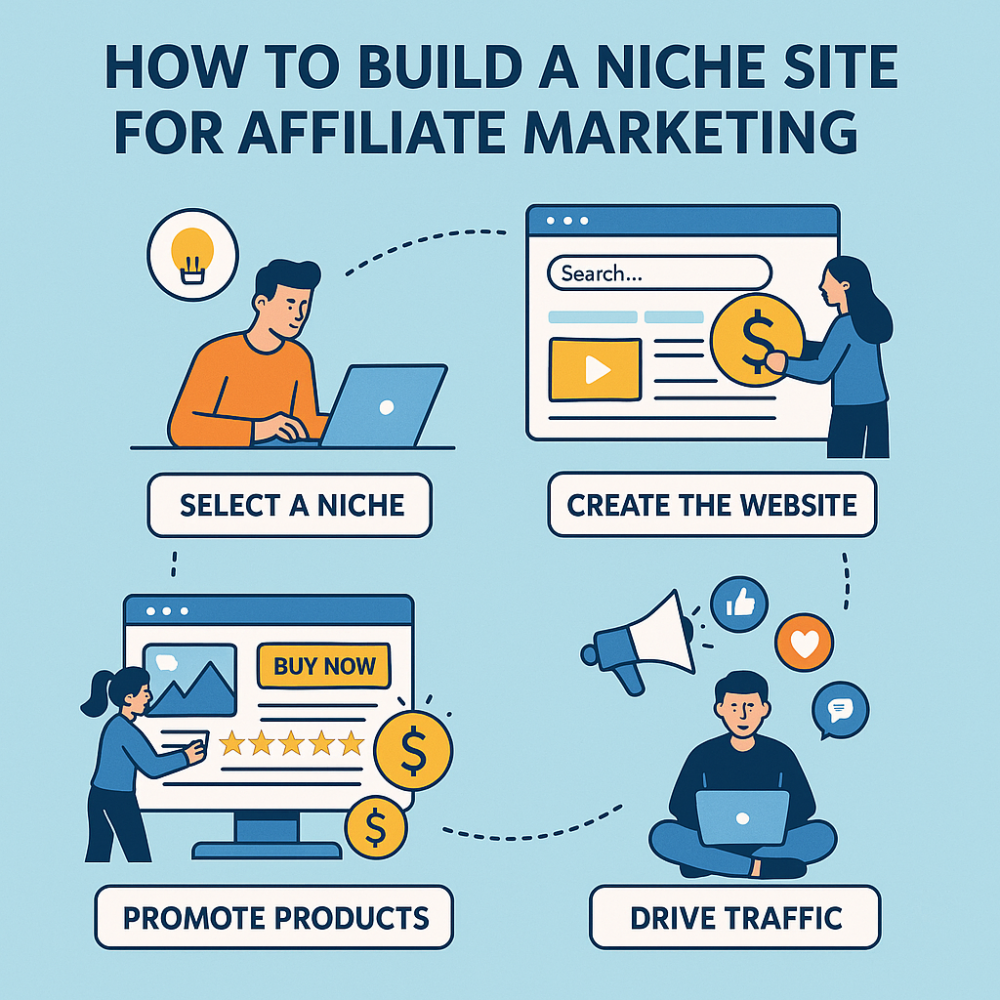
A niche site is like having a little corner of the internet dedicated just to one specific topic or interest. Imagine it as your own digital store, where instead of stocking shelves with products, you’re serving up content that addresses a particular audience’s needs or interests. This content-focused approach is great because it helps build trust and expertise in a specific area.
Affiliate marketing is all about recommending products or services to your audience, and earning a commission whenever someone makes a purchase through your recommendations. You’re essentially the middle person between consumers and companies, guiding them to products they’ll love.
Combining niche sites with affiliate marketing is a recipe for success. When you focus on a specific niche, you’re speaking directly to people interested in that topic, increasing your chances of conversion. Think about it – if you’re passionate about gourmet coffee, for instance, and create a website just on this topic, you’re naturally attracting coffee enthusiasts who trust your advice on the best beans or brewing gadgets.
Looking at examples might help here. Sites like ‘The Wirecutter‘ have built empires by narrowing in on technology and home goods, giving thorough reviews and trusted recommendations. This strategy not only brings in an engaged audience but also creates a steady stream of affiliate revenue.
Focusing on a specific audience, rather than trying to be a jack of all trades, is key here. It’s easier to cater your content, marketing strategies, and even the products you recommend to a smaller group with specific needs, rather than trying to appeal to everyone. Trust me, your effort will go much further, and you’ll find it more fulfilling when you’re hitting it off with people who get what you’re about.

Finding the Perfect Niche: Research Strategies and Tips
Picking a niche isn’t just about what’s trendy—it’s about finding that sweet spot between what interests you and what’s profitable. Start by reflecting on your own passions and skills. What topics can you talk about for hours without getting bored? These are great indicators of where you might want to dig deeper.
To get a broader view, tools like Google Trends and SEMrush are your best friends. They help spot popular search terms and emerging markets. Try to pinpoint where there’s a demand for information or products but not enough supply. This gap is where your niche could thrive.
Solving problems is another goldmine. Ask yourself, what issues can I (or my future site) solve for people? By addressing these pain points, you position your site as a valuable resource people naturally gravitate towards.
A crucial part of this process is competitive analysis. You don’t want to dive into a space that’s too crowded unless you have a unique angle. Check out what other sites in your potential niche are doing—is there room for innovation? Can you offer something different or better?
Finally, consider profitability. It’s not just about what you love; it’s also about sustainability. Look into potential revenues like affiliate programs or product partnerships in your chosen area. Balancing passion with profit is the key to picking a niche that works for you.
Building a Solid Foundation: Domain, Hosting, and Key Features
Getting your domain name right lays the groundwork for your niche site’s success. Aim for something catchy and relevant to your niche. It should be easy to remember and type. You don’t want potential visitors struggling to find you in the vast world of the internet.
Building a Solid Foundation: Domain, Hosting, and Key Features
When it comes to hosting, the word of the day is reliability. You need a hosting service that’s dependable yet affordable. Some popular services like Bluehost or SiteGround offer great options that won’t break the bank, plus they provide excellent customer support in case you hit any snags.
Embedding the right features into your WordPress site is a game-changer. Plugins play a crucial role here. You should look into SEO plugins like Yoast to help optimize your site for search engines and analytics plugins to keep tabs on visitor statistics. Consider e-commerce plugins if you plan on selling products directly.
A user-friendly design isn’t just about looking good—it’s about making sure visitors can easily navigate your site. Mobile responsiveness is crucial since so many users browse on their phones. You don’t want to lose half your audience because your site doesn’t play nicely on smaller screens.
Remember, the aim is a seamless experience that encourages visitors to stick around, explore, and ultimately, trust your recommendations enough to click on those affiliate links.
Crafting Quality Content: SEO Techniques and People-First Strategies
Great content isn’t just about stuffing keywords into paragraphs. It’s about delivering real value to your readers while ensuring your site is discoverable. The key is to make your content engaging and informative. Make it something people actually want to read, not just a wall of words designed to manipulate search engines.
When it comes to SEO, it’s about striking the right balance. Use keywords naturally within your text. They should flow with the narrative, not disrupt it. Long-tail keywords can be especially useful as they cater to more specific queries and often face less competition.
Multimedia can significantly enhance the user experience. Images, videos, and infographics aren’t mere decorations—they provide additional layers to your content, making it more engaging and easier to digest. They can illustrate points visually, help break up text, and increase reader interaction time.
Building authority is crucial. This is where your expertise shines. Use original research or unique insights to back up claims and establish yourself as a thought leader in your niche. This isn’t just about gaining traffic—it’s about building trust. Your audience should leave your site feeling informed and confident in the information they’ve received.
Remember, people-first content prioritizes the reader’s experience. It’s not just about getting eyes on your site but ensuring that those eyes are attached to satisfied users who feel their time was well spent.
Choosing the right affiliate programs is crucial for enhancing your site’s revenue potential. Focus on finding reputable programs that align closely with your niche. The idea is to partner with brands that resonate both with you and your audience—this alignment builds trust.
Integrating affiliate links into your content should feel natural, not forced. Your recommendations should flow logically within your posts, adding value rather than just breaking the narrative to push a product. Readers will be more inclined to follow through if they feel the suggestion is genuine.
Keep a close eye on your conversion rates. Tools like Google Analytics and affiliate networks’ dashboards can provide insights into what’s working and what isn’t. Use this data to tweak and optimize your strategies, making sure you’re making the most out of every visitor interaction.
Maintaining transparency with your audience is important. Publishing clear disclosure policies about your affiliate relationships builds trust, which is crucial for a sustainable model. If your audience feels they can trust you, they’re more likely to take your advice and click on those links.
Sustaining Growth: Traffic Generation and Community Building
Generating traffic goes beyond search engines. Social media platforms offer a fantastic opportunity to reach a broader audience. Create engaging posts, participate in groups, and share your content where your audience hangs out online. Be consistent, and don’t be afraid to experiment with different types of content.
Email marketing remains a powerhouse for keeping readers engaged. Building an email list is like having a direct line to your audience, so offering something valuable in exchange for sign-ups, like a downloadable guide or weekly newsletter, can boost participation.
Collaborations with others in your niche can also open up new avenues for traffic. Guest posting, hosting joint webinars, or doing social media takeovers with like-minded creators can introduce your site to their audiences, bringing fresh visitors to your content.
Don’t just focus on getting new visitors—work on building a community around your site. Engage with your readers by responding to comments, starting discussions, and maybe even creating a forum for them to interact with each other. A thriving community can lead to more frequent visits and increased trust.
Make sure you regularly analyze traffic data. Understanding where your visitors come from, what keeps them on your site, and why they leave can help you refine your strategies. Regular tweaks and adjustments based on this data ensure your traffic remains steady and grows over time.

Leveraging Learning Platforms and Community Resources for Success
Learning never stops, especially when it comes to affiliate marketing and managing a niche site. Platforms like Wealthy Affiliate offer a vibrant community and resources tailored for affiliate marketers. These platforms are packed with guides, forums, and mentors dedicated to helping you refine your strategies and boost your site’s performance.
Being part of an affiliate community provides you with insights from experienced marketers who have walked the path you’re on. This interaction can keep you updated on industry trends, tactics, and tools that are working for others. Sharing your own experiences not only contributes to this growing pool of knowledge but also positions you as an emerging expert.
Besides formal learning, real growth often comes from experimentation. Don’t hesitate to try new things, whether it’s a fresh content format, a different promotional strategy, or a new type of affiliate partnership. Measure the outcomes to find what truly resonates with your audience.
Lastly, make sure your site invites action. Have clear calls to action throughout your content, encouraging visitors to explore further or engage with your offers. A well-placed call to action can guide users through their journey, making them more likely to convert and become loyal followers.
Keep using all the knowledge and resources available to you, from online courses to community feedback. Your ongoing dedication and adaptability are what will ultimately drive your success in building a thriving niche site.